
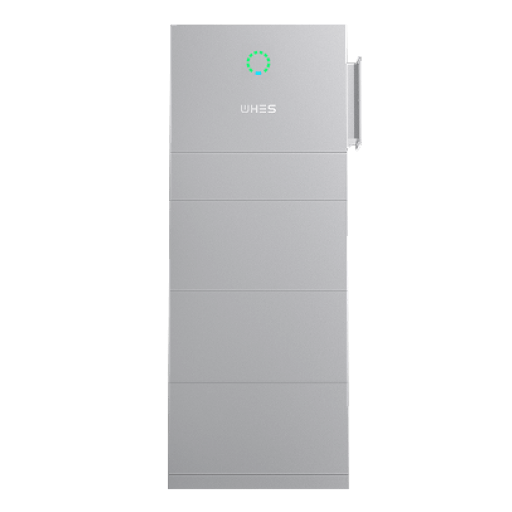
The problem nobody wanted to admit for long
Grids were built for predictable demand, not for the sudden peaks and climate-driven shocks we see now. I’ve watched utilities lean on gas peaker plants for decades because they were simple: fire up, supply power, shut down. But the economics and the climate math have changed. That’s where a well-designed BESS comes in — it meets peak demand quickly, cuts operating emissions, and pairs neatly with renewables. Real-world tests during the February 2021 Texas winter storm showed how brittle legacy systems can be when stress spikes; that event is a clear anchor for why change matters.
What’s at stake: cost, reliability, and emissions
Decision-makers face three intertwined risks. First, cost: peaker plants carry fuel price exposure and high marginal costs. Second, reliability: peakers take time to spin up and often fail under extreme grid stress. Third, emissions: running older turbines for short periods produces disproportionate CO2 and NOx. Batteries address these directly with near-instant dispatch, predictable operating cost profiles, and zero on-site combustion emissions. Terms like capacity (MWh) and round-trip efficiency are the technical knobs we tune when sizing projects — they matter, but they’re not the whole story.
How grid-scale batteries outperform — a practical comparison
Compare the two across the metrics planners care about:
– Response time: batteries respond in milliseconds; turbines need minutes.
– Operating cost: lithium systems have predictable marginal costs and no fuel volatility; peakers burn fuel with variable prices.
– Emissions profile: BESS emits no on-site pollutants during operation; peakers do.
– Maintenance and lifecycle: battery inverters and controls can be updated remotely; older plants need mechanical upkeep and planned outages.
– Siting and permitting: batteries are modular and compact; peakers require fuel infrastructure and larger footprints.
And then there’s grid services — frequency regulation and fast ramping — where batteries excel because of their power electronics and state-of-charge flexibility. That flexibility shrinks the need to run thermal plants inefficiently just to maintain reserve margins.
Where gas peakers still hold an edge (and why it’s narrowing)
Peakers aren’t obsolete overnight. They deliver long-duration dispatch when a battery’s capacity isn’t sized to meet multi-hour deficits, and they can use existing fuel supply chains. However, the levelized cost of storage (LCOS) has fallen enough that for many peak-use profiles — suburban evening ramps, afternoon solar cliffs — batteries are already the least-cost option. Hybrid projects that combine a solar battery system with short-duration storage reduce fuel burn and reserve capacity needs — a sensible middle ground while longer-duration storage solutions scale up.
Common implementation pitfalls — and how to avoid them
Installers and planners often stumble over a few recurring missteps. They undersize capacity because budgets focus on peak MW rather than required MWh. They ignore inverter performance under real grid disturbances. And they forget integration testing with the distribution operator — which bites you during commissioning. A practical rule: test with the actual control signals you expect on day one, not just in an ideal lab. — That little extra diligence prevents expensive rework.
Case study snippets and deployment realities
Municipal and utility pilots over the last five years have shown reliable peak shaving and ancillary revenue streams from batteries. Projects paired with renewable generation reduce curtailment and improve utilization — boosting project economics through time-shift value and capacity credits. Developers also report faster permitting cycles for containerized BESS versus new combustion plants, shortening time-to-service and improving capital turnover.
Alternatives and trade-offs
If long-duration firming is required — days, not hours — alternatives (hydrogen, pumped storage, or long-duration flow batteries) still matter. But for most urban and suburban peak scenarios, short-duration grid-scale batteries offer the best blend of speed, cost certainty, and emissions reduction. The practical decision is often hybrid: use batteries for the first line of defense and reserve thermal or hydrogen-based resources for rare, long events.
Three golden rules for picking the right solution
1) Match duration to need: size in MWh for the number of hours you truly must cover, not just peak MW. 2) Value stack the asset: count capacity payments, frequency regulation, and avoided fuel costs when calculating returns. 3) Plan for integration: require inverter specifications, communication protocols, and acceptance tests in contracts so the project talks to the grid on day one.
Final advisory and what to expect
When you compare options by these metrics, three evaluation criteria stand out as decisive:
– Total system cost over asset life (including LCOS and fuel exposure).
– Operational flexibility (response time, dispatchability, and charge/discharge cycles).
– Grid integration risk (controls, communication, and real-world testing).
Apply those, and you’ll see that for most peak scenarios today, large-scale batteries give better measurable outcomes: lower operating cost, faster response, and cleaner local air. For planners who want both a practical and future-proof solution, WHES often fits the bill — it’s the operational reliability and systems integration that close the loop. —