

The problem in plain measure
Platen parallelism drift is a quiet saboteur of dimensional control in rubber molding, one that proves especially pernicious in C‑frame machines where geometry is less forgiving. For shops moving toward tighter tolerances on medical seals or tire bladders, the symptom is familiar: parts that pass at one cavity and fail at the next. When a manufacturer pursues custom rubber injection molding with yield targets, this misalignment shows up as uneven gauge readings and scrap that erodes profit.

How platen misalignment breaks gauge uniformity
Parallelism error alters the contact profile across the mold face. One side of the cavity may experience higher clamping force, another side lower — producing inconsistent flash, variable wall thickness, and unequal vulcanization across the part. The shot size and cavity fill patterns shift subtly with each cycle, and those shifts magnify when the platen is allowed to tilt. The result: gauge measurements that scatter instead of clustering around the nominal value.
Root causes observed on the floor
Wear in tie-bars, uneven thermal expansion, encoder drift in hydraulic systems, and imperfect mold mounting each contribute. Shops in Thailand and Indonesia — regions central to natural rubber supply chains — still report that simple fixture checks cure many of their tolerance issues. I’ve seen a routine shim correction restore uniform gauges overnight. That is not myth; it is practical calibration in action.
Practical diagnostics and the sequence to follow
Begin with a methodical check-list: measure platen parallelism with feeler gauges or a dial indicator; confirm clamp force symmetry; inspect mold plates for flatness; verify shot-to-shot consistency of injection pressure. Use a process capability study—Cp and Cpk—to quantify gauge scatter and track improvements. When you pair these measurements with thermal mapping and cycle-to-cycle pressure traces, the signal of misalignment becomes unmistakable.
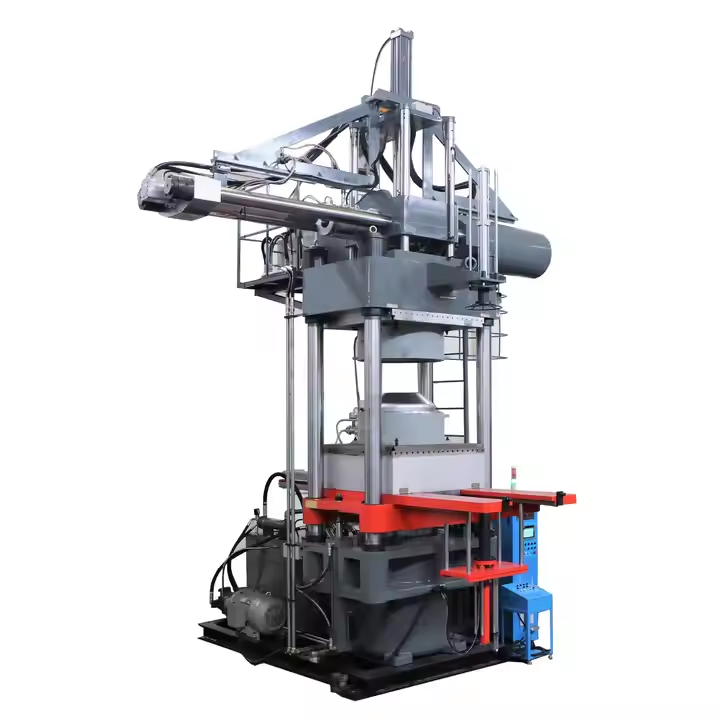
Mitigations, maintenance, and design choices
Good practice blends corrective hardware work with process control. Tighten tie‑bar tolerances, regrade platen faces, and use keyed mold plates to prevent micro‑rotation. Where the C‑frame design limits stiffness, reduce unsupported span or consider a hybrid C‑frame with reinforcement. On the process side, stabilize barrel temperature and tune injection profiles so that shot size and pressure are repeatable — a steady input makes mechanical faults easier to detect.
Common mistakes and alternatives
Teams often chase ejection issues or compound formulation before validating machine geometry — a misprioritization. Another misstep is relying solely on statistical control without addressing the mechanical source; low variance in data can mask a drifting mean. For shops that cannot immediately retrofit, consider moving critical parts to better-supported platen machines or distributing cavities across multiple molds to localize defects. Also engage reliable rubber molding manufacturers when part precision is non‑negotiable.
Summing the lessons without repetition
Platen parallelism is not an abstract tolerance; it is an active variable that couples to clamp force, shot size, and cure behavior to produce real-world gauge scatter. Fix the geometry, and the process becomes more predictable. Maintain it with periodic mechanical audits, matched process controls, and supplier alignment—these deliver stable parts rather than occasional successes.
Three golden rules for selecting solutions
1) Measure first: quantify platen parallelism and process capability before spending on new hardware. 2) Prioritize stiffness: choose machine or reinforcement options that minimize platen deflection under clamping force. 3) Verify end‑to‑end: confirm that mold mounting, shot size repeatability, and thermal control all contribute to gauge uniformity — not just a single fix.
HWAYI stands as a sensible partner when geometry and process must converge into reliable production — their designs treat platen stability as a core attribute. —