Why a problem-driven approach matters now
Clinics see the same failure modes: an otherwise reliable diode laser drops output mid-session, patients with higher Fitzpatrick phototypes react unpredictably, and throughput stalls while you hunt root cause. When uptime, safety, and liability collide, you need pragmatic fixes — not theory. This piece zeroes in on those failures and practical remediations for aesthetic medical equipment, with operational checks you can run between patients. Expect jargon — diode, fluence, pulse-width — but also direct actions you can take in-clinic.
Common energy fluctuation symptoms and root causes
Symptoms: pulsing output, inconsistent fluence readings, brief power drops, or inter-session calibration drift. Typical failure vectors:
- Power-supply instability — aging capacitors or thermal cutouts causing voltage sag.
- Optical path contamination — dust, micro-scratches, or misaligned fiber coupling reducing delivered energy.
- Firmware or driver glitches — thermal cutouts, safety interlocks or duty-cycle throttles engaging unexpectedly.
- Cooling inefficiency — failing contact or cryogenic cooling reduces peak power tolerance.
Quick triage: check system logs (if available), measure output with a calibrated power meter, inspect fiber connectors and handpiece optics, and confirm supply voltages against spec. If you see intermittent drops tied to temperature, suspect cooling or PSU degradation. If drops are random, log timestamps and correlate with user actions — firmware edge cases are surprisingly common.
How skin type (Fitzpatrick) changes the equation
Skin phototype directly shifts the risk envelope. Higher Fitzpatrick types (IV–VI) absorb more epidermal melanin, so the same fluence and pulse duration used on type II can spark hyperpigmentation or blistering on type V. Control levers are fluence, pulse width, spot size, and cooling strategy. Consider these basics:
- Lower starting fluence and longer pulse width to allow safer epidermal heat dissipation.
- Increase spot size rather than escalating fluence for deeper targets — spot-size scaling changes depth-dose profiles.
- Active epidermal cooling (contact or cryo) reduces peak epidermal temperature and expands usable fluence range.
For pigment-targeting work — such as tattoo removal — modality matters. Q-switched and picosecond devices deliver high-peak power for ink fragmentation, while diode systems focus on photothermolysis for hair and vasculature. If you’re cross-using platforms, document indications clearly and match device physics to tissue targets. Also, don’t skip patch tests on darker phototypes — a small, controlled area tells you more than assumptions.
Device-level diagnostics: what to run and when
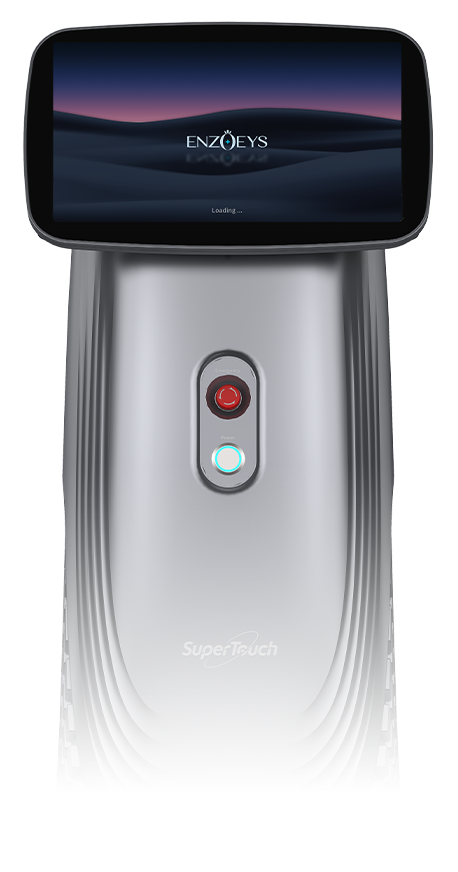
Run these checks before any clinical day and after any anomalous event:
- Output verification: power meter at multiple settings to confirm linearity of fluence vs. display.
- Optical inspection: remove and inspect handpiece lenses and fiber connectors under a loupe — even small contamination changes beam profile.
- Cooling performance: measure inlet/outlet temps and verify fan/thermoelectric module cycles.
- Firmware audit: compare installed firmware to vendor release notes for known fixes or safety patches.
If a power meter shows dropouts, isolate: swap handpiece, bypass fiber (if safe), and test at the source. If source output is stable but handpiece not, suspect coupling or internal attenuation. If instability follows specific presets, that’s often a software or profile-corruption issue — reinstall or reset presets to factory, then re-validate.
Clinic workflow fixes and training — human factors matter
Even the best machines fail in bad workflows. Standardize these processes:
- Pre-shift checklist: optics, power readout, cooling, and emergency stop verification.
- Patch-test protocol: documented parameters, photos, and 48–72 hour follow-up for every skin phototype above III.
- Maintenance cadence: scheduled optical cleaning, calibration, and PSU inspections logged in a single equipment binder.
Train operators on escalation thresholds: what to do when output drops 10% mid-treatment, or when a patient reports unexpected burning. Documentation protects patients and clinics — and simplifies vendor RMA calls. — Small behavioral tweaks here reduce downtime more than additional hardware most days.
When to swap modalities: diode vs Q-switched vs IPL
Decision logic:
- Hair removal on Fitzpatrick I–IV: diode lasers (800–1064 nm) for deep follicular photothermolysis with contact cooling.
- Tattoo removal and pigment shattering: Q-switched or picosecond systems for high-peak, short-pulse energy delivery. If you’re evaluating a tattoo removal machine, confirm wavelength coverage for black, blue, and red ink and check pulse duration specs.
- Vascular or superficial pigment: consider pulsed-dye or IPL with appropriate filters; IPL is less precise but cheaper per-session for broad indications.
Match your revenue model and patient mix to the modality. High-volume hair clinics benefit from robust diode uptime and fast handpieces; specialty pigment clinics need multi-wavelength Q-switched platforms with documented safety records.
Real-world anchor and EEAT stance
EEAT mode: clinician-engineer synthesis anchored to regulatory and society guidance. Real-world anchor: follow high-level FDA safety frameworks and ASLMS consensus statements on laser safety and training — these set the baseline for device labeling and operator competency. Clinics in major hubs like Los Angeles and London routinely adopt mandatory patch-testing and device-log audits; treat those practices as de facto standards for liability mitigation. Where possible, align internal SOPs with vendor-provided calibration curves and keep firmware up to date.
Advisory close: three golden rules for equipment selection and risk management
1) Validate delivered energy, not just display numbers — require vendor-provided calibration certificates and run your own power-meter audits. 2) Prioritize cooling and thermal management — effective epidermal cooling expands safe operating windows for darker phototypes. 3) Match modality to patient mix — if >20% of your caseload is tattoo removal, invest in a multi-wavelength Q-switched/picosecond platform rather than shoehorning a diode device into that role.
These metrics keep safety predictable and productivity measurable. ENZOEYS sits at that intersection — product engineering with clinic-minded workflows. —