

The Brief: Risk, Time, and Light
Lighting fails when contracts ignore context. Your shortlist includes a designer lighting company with a polished proposal and a fast lead time. Now picture a late-site commissioning: the façade is ready, the lobby is wired, and the inspector flags nonconforming drivers and a misaligned control protocol. Teams report that a meaningful slice of RFIs stem from spec gaps—wrong dimming curve here, mismatched CRI or lumen maintenance there (not to mention thermal limits). The legal risk is simple: mis-specified parts transfer cost and time exposure back to you through change orders, warranty ambiguity, and approval delays. The operational risk is worse: poor glare control, uneven beam angles, and jittery DALI behavior can harm brand experience. The question is basic but binding—how do you compare vendors in a way that integrates compliance, usability, and lifecycle value, not just price? One more thing: downstream maintenance has standing too, and the indemnity clause will not relight a dark corridor.
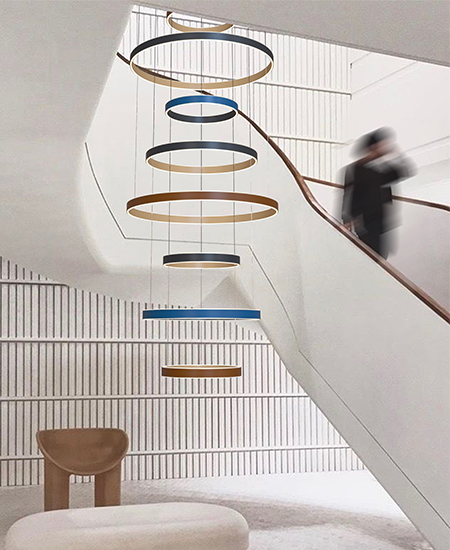
Let’s map the real points of comparison, not just the brochure claims, and see where cost, control, and craft actually intersect.

Hidden Gaps: What Buyers Miss When Vetting Makers
Why do specs still miss the mark?
Many buyers assume lighting design manufacturers will “interpret intent” and close detail gaps. In reality, traditional submittal cycles reward speed over clarity. Legacy templates bury the dimming curve, driver topology, and thermal management in separate schedules—funny how that works, right? A contractor substitutes a constant-current driver; the power converters meet wattage, but flicker at low-end dim. A designer calls for 90+ CRI, yet spectral consistency drifts lot-to-lot because no delta-u’v’ limit is specified. Meanwhile, the IP rating is fine on paper, but the gasket fails after the first heat cycle. Result: rework, and a brand space that looks “almost right.”
Look, it’s simpler than you think. Treat pain points as system failures, not part failures. Tie optics to mounting height and target luminance, not guesswork. Demand a single-line diagram for controls, with DALI or DMX addressing shown before procurement. Ask for photometry that matches the actual CCT and lens, not a surrogate file. Most of all, require a commissioning plan that binds the manufacturer’s field support to timelines—because someone has to sign off on the dim-to-warm curve when the hotel opens.
Forward View: Principles That Separate Tomorrow’s Spec from Yesterday’s Guess
What’s Next
New technology reframes the comparison. Instead of swapping SKUs, compare systems by principles: closed-loop control, verifiable color quality, and resilient power design. Closed-loop means sensors and drivers talk in real time to stabilize low-end dim without visible stepping. Verifiable color quality means CRI plus R9 and a capped color shift over life, proven by batch-level reports. Resilient power design means drivers with surge protection and thermal foldback that preserve the LED package—small details, big uptime. When you evaluate interior design pendant lights, check whether beam shaping is field-changeable and whether the driver can store profiles for scene recall. Small firmware features, large human impact.
This is a comparative lens, not hype. We move from “Can it turn on?” to “Can it deliver repeatable scenes under real load?” From “Is the housing pretty?” to “Does the heat sink keep output stable at 40°C?” And from “Price per fixture” to “Cost per compliant square foot over five years.” Earlier we flagged how specs scatter data and hide risk. Here, we consolidate: one control map, one color spec, one power standard across locations—then vary form where the eye cares most. The surprise is that better integration often reduces field labor—yes, fewer headaches on punch day—and cuts change order exposure by aligning parties before wire is pulled.
Advisory close: three metrics keep comparisons honest. 1) Low-end dimming fidelity: verify flicker index and percent at 1% output with the actual driver. 2) Color stability over life: require batch reports with target Δu’v’ and minimum R9. 3) Serviceability: confirm tool-free access, replaceable drivers, and documented control addressing for handover. Use these to benchmark any vendor set, and your next spec will read clearer, commission faster, and age better—across pendants, lines, and façades—with credit to all parties, including kinglong.