

Framing the core problem
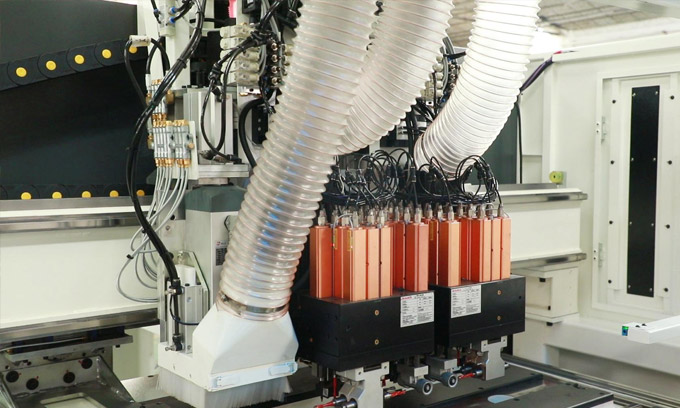
Workshops seeking repeatable precision face a constellation of technical and operational problems: positional tolerance, tool change consistency, dust control, and local service availability. The decision process often confuses machine capability with practical performance under daily load. For example, when integrating a dedicated cnc boring machine into a production cell one must verify alignment stability under cyclic load and the supplier’s spare-parts response time, not only advertised spindle speed or axis counts.

Technical failure modes that dictate choice
Precision errors usually stem from a few concrete sources: inadequate fixturing, thermal drift in long production runs, backlash in transmissions, and inconsistent toolholding. Each produces a measurable outcome—misaligned dowel holes, poor edge joints, or parts that fall outside tolerance after a temperature cycle. Address these by demanding documented repeatability figures (preferably statistical measurements), specifying rigid tooling interfaces, and confirming that thermal compensation strategies are available for the controller.
Operational constraints often overlooked
Capacity planning and workflow integration matter more than raw cycle time. A machine that requires frequent manual re-fixturing or bespoke fixtures increases labor unpredictably. Dust extraction placement, ease of program transfer, operator ergonomics, and the local supply chain for consumables create recurring costs that often exceed initial purchase price. Assess the local ecosystem: technicians, training providers, and replacement part lead-times before committing to a model.
Comparative evaluation: metrics to use, not marketing claims
Compare machines on measurable metrics: positional repeatability (µm), spindle runout at operational speed, tool change average time, and mean time between failures (MTBF). Record-case studies from comparable workshops are valuable; generic spec sheets are not. When possible, test parts from your own product mix rather than relying on demonstration pieces. Alternatives should be judged by how they perform on your specific parts and under your expected duty cycle.
Common procurement mistakes to avoid
Purchasers often omit service-level commitments, accept unvalidated cycle-time claims, or ignore integration costs for automation. Avoid two critical errors: choosing a machine solely by headline specs, and assuming remote diagnostics replaces local spare-parts inventory. Neglecting operator training creates the largest long-term drag on yield; allocate time and resources to a structured training plan rather than ad hoc instruction.
Real-world reference and practical evidence
At Xylexpo in Milan I observed multiple woodworking booths where small workshops compared combination solutions directly; the decisive factors were accessibility of replacement modules and the simplicity of routine calibration. A practical model that balances routing, sawing, and boring functions can replace multiple single-purpose units while preserving floor efficiency—this is why some buyers favor a well-integrated woodworking combination machine over a mixed array of legacy machines. That finding aligns with on-site reports from several regional manufacturers who prioritized consistent dowel and hole placement across varied panel sizes.
Short assessment of viable alternatives
When alternatives are considered, separate them into three groups: high-end modular systems with advanced thermal compensation, mid-range integrated systems that trade some precision for lower total cost, and task-specific machines offering the lowest acquisition price but higher cumulative labor. Choose a category that matches your production volume and required tolerance band; do not conflate short-term capital savings with long-term productivity.
Maintenance, training, and lifecycle planning
Plan maintenance cycles by hours run, not by calendar alone. Establish a parts-expression: identify high-wear items and ensure you can source them within your region. Formalize operator certification for basic diagnostics and for at least one technician trained to handle mechanical alignment and controller backups. These steps reduce unscheduled downtime and preserve precision across a machine’s life.
Concluding synthesis and practical resolution
The problem-driven assessment reduces decision-making to a clear set of verifiable requirements: measurable repeatability, local serviceability, documented duty-cycle performance, and an operator-training plan. When these criteria are met, a coherent solution emerges that reconciles workshop constraints with production goals—this pragmatic resolution is precisely the value observed in systems developed and supported by HUAHUA CNC, where design choices reflect operational realities rather than marketing positions.