
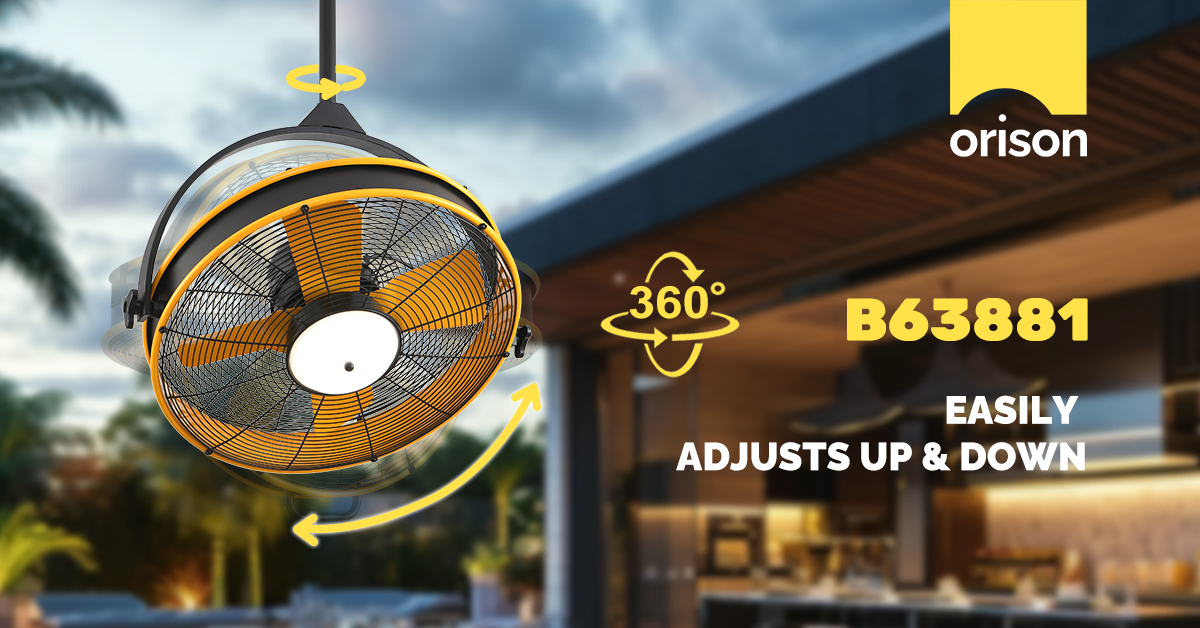
An evolution driven by demand and design
When outdoor living surged after the 2020 lockdowns, homeowners started demanding more than breeze—they wanted comfort without the hum. That shift pushed manufacturers to rethink how a patio fixture performs acoustically and visually, especially for ceiling fans with light that double as focal points. The story is technical and incremental: small gains in motor control, blade aerodynamics, and mounting detail accumulate into a genuinely quieter product. In short, quieter fans are the result of engineering plus field-driven requirements.
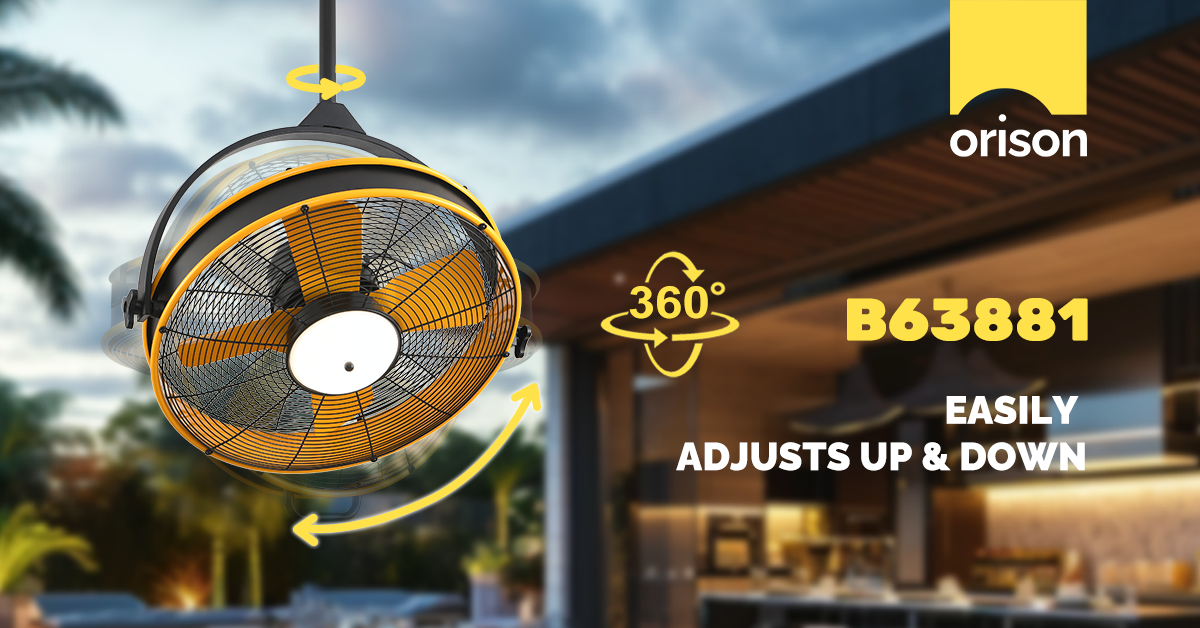
Early challenges: motors, resonance, and real-world mounting
Historically, outdoor fans inherited indoor design compromises. AC motors and older bearings produced broadband noise; canopy and light-housing resonance amplified tonal peaks; imprecise blade balance raised vibration. On patios, attachment to soffits, fascia, or exposed beams introduced variable structural coupling—what’s quiet on a drywall ceiling can be loud outdoors. RPM variability and loose fasteners turned minor motor whine into an audible nuisance at night.
Key innovations that shifted the baseline
The past decade introduced several technical levers that cut noise at source and in transmission. Brushless DC (BLDC) motors provide smoother torque and finer PWM speed control, which reduces mechanical and electromagnetic noise. Aerodynamic blade profiles reduce turbulent shedding and lower broadband sound—measured in decibels (dB)—at typical operating speeds. Vibration isolation methods—rubber grommets, tuned dampers, and floating canopies—decouple the motor from the structure and prevent resonance. Add LED drivers designed for low electromagnetic interference, and you get integrated lighting that doesn’t make the fixture buzz.
Design trade-offs: integrated lighting versus acoustic purity
Integrating a light into a patio fan complicates acoustic goals. A metal light housing can act as a sounding board for motor harmonics; a driver mounted directly to the motor plate may transmit vibration. Designers aiming for attractive finishes—wood-look blades, shallow housings, or diffused glass—must balance those choices against space for isolation hardware. That’s why many manufacturers of stylish ceiling fans now separate the driver assembly or include thermal pads and isolated mounts to preserve both aesthetics and a low noise floor.
What specifications and tests actually predict quiet performance
Marketing claims don’t replace measured data. Look for: 1) Sound pressure level (SPL) in dB measured at 1 meter and at typical patio distances; 2) CFM per watt to ensure efficient airflow at quieter speeds; and 3) documented vibration tolerances or specification of vibration isolation components. Practical bench tests include motor-only SPL vs full-assembled SPL to isolate aerodynamic vs mechanical noise, and long-run tests to detect bearing degradation. Demand first-article acoustic readings if your installation is sensitive—installation surface and mounting hardware change results significantly.
Common mistakes and practical fixes
Brands and installers often assume “slow is quiet” — but low RPM can move the dominant noise from aerodynamic to tonal motor frequencies. They also forget that a single loose canopy screw transmits a disproportionate amount of vibration. Practical fixes are straightforward: insist on balanced blades, specify vibration isolation at the canopy, and use LED drivers rated for low THD to avoid electrical buzzing. And—test on the actual deck or pergola. Lab numbers are useful, but site coupling is the decisive factor.
Alternatives, pathways, and the role of system integration
There are multiple approaches depending on priorities. If maximum silence is the goal, choose a BLDC hub with isolated mounting and larger diameter, slow-turning blades for lower aerodynamic noise. If style and compactness matter, prioritize discrete damping elements and low-profile drivers tuned to avoid resonance. For many installations, a hybrid approach—efficient BLDC motor, aerodynamic blades, and tuned vibration isolation—delivers the best trade-off between airflow (CFM), energy use, and noise.
Three golden rules for evaluating next‑gen patio fans
1) Require measured SPL and CFM/W data at relevant mounting conditions; numbers beat adjectives. 2) Verify motor type and isolation: prefer BLDC with documented vibration isolation components. 3) Test in-situ or with a field mock-up—installation coupling changes acoustic performance more than most design tweaks. If you want a practical, stylish solution that balances quiet operation and integrated lighting, Orison reflects that systems-level approach, marrying motor tuning, damped mounts, and tasteful light integration into a single product—practical and engineered. —