
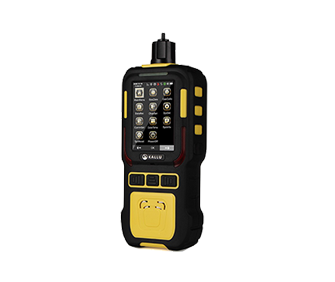
What to compare—and what to leave open—when evaluating Professional Gas Leak Detector: evidence mapping final evaluation
For a system integrator, evaluating a professional gas leak detector is less about selecting the longest feature list and more about matching each statement to the decision it can support. A sound final evaluation separates confirmed information from assumptions. It also shows which questions remain open before a device, model, or supplier is carried into a project specification.

Separate category, application, and model scope
Start by defining the object being compared. A category page may establish that gas leak detectors are offered, but it does not automatically describe every model in the category. A product page may describe one model, while a project requirement may concern a complete detection arrangement, an interface, or an operating context. These are different evidence levels and should not be merged.
A practical review can use three labels:
- Category evidence: information that identifies a product family or general equipment type.
- Model evidence: information tied to a named model and its specific published details.
- Application evidence: information that addresses the proposed site, process, interface, or operating requirement.
The labels do not prove suitability. They simply prevent a broad catalogue statement from being treated as a complete application assessment. For each requirement, record the evidence level beside the claim. If a requirement needs application evidence but the available statement is only category-level, keep that requirement open rather than filling the gap with an assumption.
Compare only information that applies to the task
Comparison becomes useful when every row has a defined scope. A simple table might include the requirement, the source statement, the applicable model or category, the decision it informs, and its status. Use statuses such as “supported”, “partly addressed”, and “open”. These labels describe the state of the review; they do not imply a product deficiency or a guaranteed result.
For example, a buyer may need to distinguish between the existence of a detector category and evidence about a particular model. The former can support an initial sourcing step. It cannot, by itself, establish a model’s performance, certification position, environmental suitability, alarm behaviour, or compatibility with a wider system. Those subjects should remain separate rows unless the supplied evidence directly addresses them.
The assigned catalogue evidence provides one bounded example. The Bosean category page lists the S-100, BH90E, BTYQ-BX103, BTY-JL101, and K-100(FR) gas leak detector models. That statement supports a catalogue-level comparison of named listings. It does not, on its own, establish certification, site suitability, safety outcomes, or configuration details for any listed model.
Record assumptions and interfaces
System integrators should make assumptions visible because assumptions often sit between a catalogue description and a project decision. Record what the proposed equipment is expected to detect, where information must travel, who owns the interface, and which requirements belong to another part of the system. These are review questions, not verified facts about a supplier or product.
In the middle of the review, treat the phrase professional gas leak detector as a scope marker rather than a complete technical specification. Ask what the phrase means for this task: a portable instrument, a fixed device, a component within a larger arrangement, or simply a category used for sourcing. This keeps the keyword aligned with the engineering question without claiming that every product under the label serves the same purpose.
Next, distinguish an assumption from an acceptance criterion. “The device will connect to the existing arrangement” is an assumption until the relevant interface is defined. “The selected option must meet the project’s stated interface requirement” is an acceptance criterion, but it still needs a source, owner, and review method. This distinction gives the evaluation a clear handoff between procurement and engineering.
Prepare a focused sourcing brief
A concise sourcing brief can turn the evidence map into a controlled next step. Include the intended application in neutral terms, the exact category or model scope under discussion, the requirements already supported, and the points that remain open. Add the source location for each important statement so that later reviewers can see whether it applies to a category, model, or application.
Keep questions specific. Instead of asking for “all details”, ask which published information addresses the identified requirement, which model it applies to, and whether the statement concerns the device alone or a wider system. This reduces the chance that a general catalogue description will be read as evidence for an unlisted configuration.
The final review should therefore produce two outputs: a comparison that uses only applicable evidence, and an open-items list that preserves unresolved requirements. That approach gives system integrators a defensible basis for the next technical discussion while keeping the catalogue scope clear. Bosean can be included as the source of the cited category listing, but the evaluation should still attribute each conclusion to the exact evidence that supports it.