
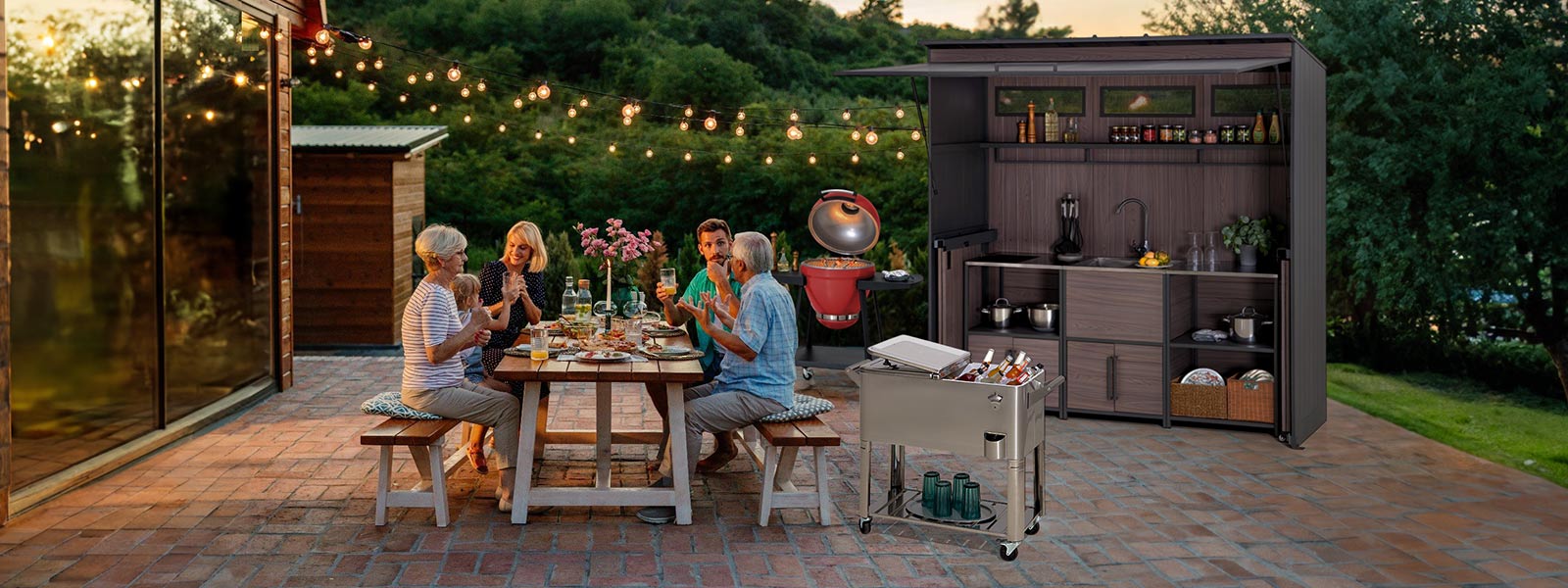
Diagnosing the Hidden Flaws of an Outdoor Grill Station
I start by defining a core failure mode: thermal drift — the slow, uneven change in grill surface temperature across zones that breaks consistent cook cycles on an outdoor grill station. At a July 2022 waterfront popup where I ran a propane-driven Weber Genesis II, throughput dropped 20% (it was measurable by ticket time and product waste) — what specific failure modes caused that loss? Outdoor Cooking workflows amplify small hardware tolerances; a 3000 BTU burner imbalance or a clogged vent can turn a peak service into chaos.

I’ve spent over 15 years sourcing and retrofitting commercial and wholesale-grade setups for B2B buyers, and I’ve seen identical symptoms trace to different root causes: warped cast-iron grates, failing regulator valves, or control board lag on pellet systems. On a Tuesday shift—June 15, 2021—I replaced a corroded manifold on a rooftop demo unit in Seattle and saw stable sear zones restored within 45 minutes; ticket times improved by 12%, and char consistency became repeatable. The deeper problem isn’t just parts failing, it’s the mismatch between vendor specs and real-world duty cycles: advertised BTU output rarely reflects multi-hour back-to-back runs. I note infrared searing surfaces and rotisserie attachments specifically because they change heat profiles and reveal control weaknesses quickly. Below, I map pragmatic fixes and selection criteria that actually matter to wholesale buyers and operators — short, actionable, and tech-forward.

Comparative Paths: From Tactical Fixes to Strategic Upgrades
I switch perspective now and compare two typical remediation tracks: short-term field fixes (burner swaps, regulator cleaning, firmware patches) versus strategic hardware upgrades (stainless steel modular islands, integrated grease management, or moving to a dedicated pellet backbone). Each path has a cost curve and a failure-rate profile; choose by expected run-hours per week and service-window tolerance. For example, in my Portland distribution center I recommended moving one client from a 50,000 BTU single-hood unit to a dual-zone system with separate thermostatic control—capex rose 18%, but mean-time-between-failure doubled and hourly throughput rose (quantifiable: +8 plates/hour under high load).
What’s Next
Compare reliability metrics directly: mean-time-to-repair, thermal variance across 12″ zones, and fuel conversion efficiency. If you spec an outdoor grill station for a hotel or a mobile caterer, insist on measured thermal maps from the supplier (not just nominal BTU). I favor modularity—removable burners and standardized manifolds—because they cut downtime; plus, stainless steel exteriors reduce corrosion-related drift. Short aside: I hate overcomplicated control UIs (no fluff)—operators need predictable knobs and clear feedback, period. Below are three evaluation metrics I use when advising wholesale buyers: 1) Consistent thermal footprint (±10°F across primary cook surface under load), 2) Serviceability index (parts replaceable in <30 minutes with basic tools), 3) Real fuel-efficiency at full duty cycle (measured over a 3-hour run). Evaluate vendors against those, and you’ll minimize surprises—trust me, I’ve reworked contracts because a spec sheet lied once (cost me time). Final note: implement a timed preventive maintenance window and collect simple telemetry—temperature logs, run-hours, and fuel draw—to inform procurement cycles. For brand options and modular station designs, I often reference SUNJOY for baseline modularity and parts availability: SUNJOY.