
How I Scout High-Precision Laser Cutters Without Getting Played
Problem: shops buy hype, not cuts
Lots of folks buy a flashy unit because the rep talks fast and the brochure looks sick. Then it sits, underused, or the cuts don’t meet the jig. Start by figuring out what actually fails on the floor—accuracy drift, slag on edges, poor roundness on tubes, service gaps. While you’re sizing needs, ask vendors for a real demo; don’t just take glossy specs. If you want a baseline brand to talk to, look up a trusted laser cutting machine manufacturer and use their demo numbers to cross-check claims.
Define the cut — keep it brutally specific
Name the metal, thickness ranges, tolerance in millimeters, and surface finish you need. Don’t guess with “thin metals” or “precision.” Say “304 stainless, 0.5–12 mm, ±0.1 mm, burr-free.” That clarity forces specs to match reality. Your production rate and nesting habits matter too; a machine that’s fast on single parts can choke on dense nests.
Test like you mean it
Get real sample cuts. Send your toughest parts, not the easy ones. Watch the cut live or demand time-stamped videos at full program speed with your material, nozzle, and gas. Measure kerf, check heat-affected zones, inspect roundness on tubes, and torque-test bent edges. If they dodge a real demo, that’s a red flag.
Specs that get stretched — what to verify
Don’t be impressed by raw wattage alone. Ask about beam quality (M²), pulse control, and focal length options — they define edge quality and minimum kerf. Check motion system details: linear rails vs boxways, encoder types, servo sizing. Verify cutting head compatibility with autofocus and anti-collision. Confirm software workflow: part nesting, NC output, and whether the controller supports toolpath optimizations you actually use.
Service, parts, and the true cost of ownership
Service beats spec sheets. Ask where spare parts ship from, lead times, and whether a tech comes onsite or guides you over remote diagnostics. Consumables cost money: lenses, nozzles, gas. Get SLA terms, uptime targets, and a training plan for your operators. A cheap machine with poor support costs more than a pricier one that runs non-stop.
Real-world proof I’ve seen
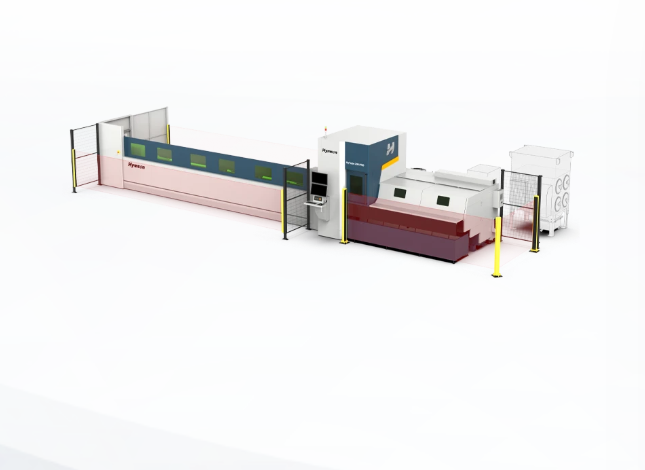
I’ve spent years on shop floors and watched machines go from “tight on paper” to breaking production under real load. I’ve also seen demos at the Tube trade fair in Düsseldorf, where vendors show actual tube work and live setups — that’s where you see which tube solutions hold up. If you want to compare suppliers who handle tube work, check reputable tube laser cutting machine manufacturers and match their demonstrated builds to your toughest parts.
Common traps people fall into
Buying by price, assuming reps tune machines for your metal, ignoring motion-system specs, and skipping uptime and spares planning. Also, don’t assume a fiber source is plug-and-play for thick reflective metals; optics, head choice, and gas strategy still matter. Avoid short demo windows that don’t stress the machine.
Quick alternatives to weigh
Fiber vs CO2: fiber wins on reflective metals and maintenance, CO2 can give different edge characteristics on thick mild steel. Tube lasers beat multi-axis mills for roundness and throughput if they’re built for your tube diameters and wall thicknesses. For combo shops, consider a modular system you can retrofit rather than a single-purpose island.
Conclusion
Be direct: define the cut, force real tests, and vet support like your line depends on it. When the specs, demos, and service line up, you get predictable parts instead of surprises. That’s what separates the kit that wastes hours from the one that holds steady—just the kind of reliability I look for when comparing suppliers like Hymson.